Robert Plant’s Kings Heath's Appearances: From Listen at the Ritz Ballroom to Priory of Brion at the Red Lion Folk Club
Updated: 2 days ago

Before Robert Plant became the voice of Led Zeppelin, he was a young singer working the Midlands club and ballroom circuit, learning how to hold a room from the floorboards to the ceiling. Kings Heath was one of the places where that education happened.
The old Ritz Ballroom on York Road was not just another local venue. In the 1960s, it was a key stop on the Regan Circuit, the network of Birmingham and Black Country clubs associated with Ma and Pa Regan. It brought national names, rising beat groups, soul bands, blues outfits and local hopefuls into the same orbit. For a singer like Plant, still pre-Zeppelin and hungry for stages, that mattered.
Kings Heath also gave him one of the more unique footnotes of his later career. On 13 November 1999, he returned to the area for a surprise appearance at the Red Lion Folk Club with Priory of Brion, the rootsy, low-key band he formed with old friend Kevyn Gammond. It linked two very different Robert Plants: the ambitious young frontman of Listen and the seasoned artist revisiting smaller rooms for the sheer pleasure of playing.
Kings Heath was part of Plant’s musical apprenticeship
Robert Plant’s route to Led Zeppelin did not run through one neat origin story. It ran through pubs, clubs, dance halls, college gigs, blues nights and support slots across the West Midlands. Before he met Jimmy Page and stepped into the role that would define hard rock singing, Plant had already spent years testing his voice in public.
That meant repetition. One-night stands. Short sets. Tough crowds. Poor sound. A constant need to make an impression before the next band came on.
Kings Heath fitted that world perfectly. The area sat within reach of Birmingham’s wider live music network, but it had its own identity. The old Ritz Ballroom was a proper stop, not a side note. Bands that played there were part of the same living circuit that fed the Midlands music scene.
Plant’s appearances with Listen belong to that period. Listen were one of his important pre-Led Zeppelin groups, active in the mid-1960s, when British beat, soul and blues were colliding in clubs around the country. They recorded, gigged and gave Plant a platform at a time when he was still developing the vocal personality that later became unmistakable.
The point is not that every night at the Ritz was historic in the grand sense. Most local gigs are not. Their value lies in accumulation. The singer who later filled arenas first had to learn how to fill a ballroom.
Listen at the old Ritz Ballroom
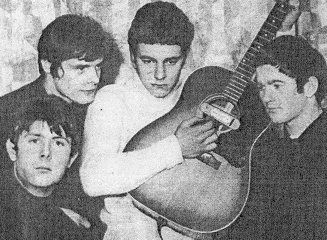
ABOVE: Listen with Robert Plant strumming the guitar
The Ritz Ballroom in Kings Heath had already earned a reputation by the time Plant appeared there with Listen. It was one of those rooms where local memory holds as much weight as formal archive. Posters went up, tickets were torn, bands came and went, and the next week another name was on the bill.
For Listen, the Ritz would have offered exactly the sort of stage a young group needed. It was big enough to matter, close enough to the Birmingham music bloodstream, and lively enough to expose any weakness. These were not polite recital rooms. They were social spaces, dance spaces and testing grounds.
The audience expected energy. They wanted songs they could move to, but they also responded to players with attitude and urgency. Plant was drawn to American blues, soul and R&B, and those influences gave him a sharper edge than many straight beat singers. With Listen, he could push that style in front of audiences who were not there to admire potential. They wanted a show.
The Ritz’s significance also comes from its place in a wider pattern. Robert Plant did not simply appear in one local venue and vanish. He worked through the same circuit repeatedly, building confidence and reputation. Listen fronted by Robert Plant are known to have played at the Ritz Ballroom in 1966 on March 4 & 30, April 24 and May 28. He may even earlier when the group were known as The Tennessee Teens. That is why the Kings Heath connection feels more substantial than a single gig listing. It was part of the terrain he crossed again and again before 1968 changed everything.
There is also a pleasing contrast between the old ballroom setting and what Plant would soon become known for. Led Zeppelin’s music grew massive, dramatic and otherworldly at times. Yet some of the instincts behind it were practical and local.
The Regan Circuit gave young bands a route through the Midlands
The phrase Regan Circuit carries real weight in Midlands music history. It refers to the linked venues and bookings associated with the Regan promotions network, which helped shape live music routes through Birmingham and surrounding towns during the beat boom and beyond.
For young bands, a circuit was more than a list of places to play. It was a ladder. If a group could prove itself in one room, another date might follow. If a singer impressed a crowd, word travelled. If a band failed, that travelled too. He is thought to have met Jon Bonham at one of the Regan circuit clubs and told him he needed a better drummer - him. Jon Bonham got his wish when they later played together in Band Of Joy and Led Zeppelin.
The old system seems almost physical now. It depended on posters in windows, local paper adverts, word of mouth, handwritten diaries, record shops and teenagers telling one another where the best night out would be. There was no instant audience online. Reputation had to travel by sound, sweat and rumour.
Plant’s work with Listen sits inside this world. The band’s appearances at the Ritz Ballroom and other Regan Circuit venues gave him repeated contact with real audiences. They also placed him among a competitive stream of musicians from across the Midlands. The region was full of players chasing the same possibilities, many of them steeped in blues, soul and rock and roll.
That environment mattered because it rewarded character. A singer did not need to be technically perfect to stand out, but they did need to be memorable. Plant’s voice had range, but his bigger gift was commitment. Even early on, he sang as if the song had to be hauled out of the air by force.
The circuit also blurred the line between local and national. A young Midlands group could share the same venue network as bigger visiting acts. That helped raise standards. It also made ambition feel practical. If major names could appear on those stages, then the gap between local work and wider recognition did not feel impossible, only difficult.
From ballroom volume to folk club intimacy
Plant’s later return to Kings Heath could hardly have been more different in scale.
By 1999, he no longer needed small clubs to make his name. Led Zeppelin had already become one of the most influential bands in rock history. Plant had built a solo career that moved through rock, blues, folk, African and Middle Eastern influences, never staying still for long. He could have lived entirely in large venues and heritage status if he had wanted.
Instead, he formed Priory of Brion with guitarist Kevyn Gammond, a musician from his pre-Zeppelin days. The group played a mixture of covers and lesser-heard songs, often drawing from 1960s rock, folk-rock, psychedelia and blues. It was not a nostalgia machine in the obvious sense. It felt more like Plant circling back to the music that had shaped him before fame hardened into myth.
That made the Red Lion Folk Club appearance on 13 November 1999 so special. It was remembered locally as a surprise return, the kind of night that becomes part of venue folklore because it feels too good to have happened in an ordinary back room. Organiser Jim McPhee was sworn to secrecy beforehand and was not allowed to mention that Robert Plant was in the group.
After the volume and mythology of Led Zeppelin, that closeness allowed Plant to be heard in another way.
Priory of Brion also suited that setting. The band did not depend on spectacle. It depended on taste, affection and song choice. Plant could revisit parts of the 1960s without pretending to be the young singer from the Ritz again. He could honour that world from the viewpoint of someone who had travelled far beyond it. Their set list was:-
Morning Dew (Tim Rose cover)
A House Is Not A Motel (Love cover)
I'm Waiting For The Man (Velvet Underground cover)
Girl From The North Country (Bob Dylan cover)
If I Were A Carpenter (Tim Hardin cover)
Darkness, Darkness (The Youngbloods cover)
Think (The 5 Royales cover)
Early In The Mornin' (Louis Jordan cover)
We're Gonna Groove (Ben E King cover)
Baby Please Don't Go (Joe Williams Washboard Blues Singers cover)
As Long As I Have You (Garnet Mimms cover)
Gloria (Them cover)
plus two encores
No Regrets (Tom Rush cover)
Trouble In Mind (Richard M.Jones cover)
Why the 1999 Red Lion night still matters
The Red Lion appearance matters because it closes a circle without making the circle too neat.
Plant’s Kings Heath story begins, in one sense, with ambition. A young singer appears with Listen at the old Ritz Ballroom and other Regan Circuit venues, chasing dates, audiences and reputation. It continues through global fame, reinvention and restless musical exploration. Then, on a November night in 1999, he turns up in Kings Heath again, not as a returning monarch, but as a working musician in a small room.
Plant has always seemed wary of being trapped by his own legend. He has never treated the Led Zeppelin years as the only story worth telling. The Priory of Brion period showed the same instinct. It placed him among songs, friends and influences rather than above them.
For Kings Heath, the night added a later chapter to an already rich live music history. The old Ritz had once connected the area to the 1960s boom. The Red Lion Folk Club showed that the connection had not faded into museum memory. Music was still happening in rooms where surprise mattered and word of mouth still had power
The two Kings Heath moments, Listen in the 1960s and Priory of Brion in 1999, show different kinds of freedom.
In the 1960s, Plant had the freedom of not yet being defined. He could try things, push too hard, learn fast and absorb everything.
In 1999, he had the freedom of someone who no longer needed to prove the obvious. He could choose the smaller path because it pleased him. The music he performed at the Red Lion was also a precursor of his recent collaborations with Allison Kraus and then Saving Grace.


Comments